基本信息
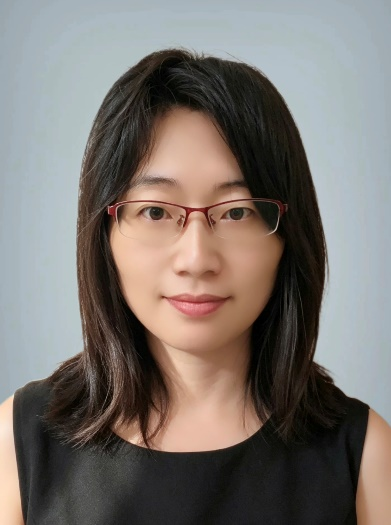
吴戈,能源与环境政策研究所,副教授,硕士生导师,四川省产业经济学会理事,四川省工业发展基金项目评审入库专家。在《统计研究》《中国人口·资源与环境》、Renewable and Sustainable Energy Reviews、Energy Policy、Energy、 Transportation Research Part A: Policy and Practice等国内外高水平期刊发表论文;主持国家自然科学基金并参与多项国家及省级重大课题;担任Journal of Environmental Management、Humanities & Social Sciences Communications、Scientific Reports等期刊审稿人;参编《新时代绿色经济与可持续发展报告》等智库报告7部;多篇咨政报告获省部级领导批示,获成都市“参谋建议先进个人”称号;指导学生获评全国公共管理硕士优秀学位论文、“挑战杯”大学生课外学术科技作品竞赛省级一等奖、国际大学生创新大赛省级铜奖。
研究领域
能源经济与环境政策、气候变化、节能减污降碳协同增效
教育背景
2002—2006 南京审计大学 财政学专业 经济学学士
2007—2010 苏州大学 世界经济专业 经济学硕士
2013—2018 南京航空航天大学 管理科学与工程专业 管理学博士
工作经历
2010.6-2014.1 南京航空航天大学金城学院
2014.8-2018.9 泰州学院
2018.12至今 西南财经大学
教学情况
《管理学原理》《科研项目专题研讨》《宏观经济学》《计量地理学》
科研和社会服务代表性成果
1.学术论文
[1] Jiang Na, Wu Ge*, Zou Weiyong, Chen Xiaodong. Responsible Use of Artificial Intelligence and the Mitigation of Corporate Greenwashing: The Role of Executive Oversight[J]. Socio-Economic Planning Sciences, 2026,105:102436.
[2] Jiang Na, Shang Qianqian*, Wu Ge *.Cross-border e-commerce pilot zones and corporate carbon emissions reduction: A quasi-natural experiment from China[J]. Chinese Journal of Population, Resources and Environment, 2026,24(1):1-13.
[3]Zhang Yuechi, Wu Ge, Miao Zhuang*. Green-biased technical change in energy and environmental factors and its influencing factors of transportation industry in China: An analysis based on BAM-DEA model[J].International Journal of Sustainable Transportation,2026,20(2):143-158.
[4]韦舒妮,袁鹏,吴戈*. 可再生能源配额制促进了低碳技术创新吗?[J].中国人口·资源与环境,2025,35(5):67-80.
[5]Wang Zhaowen, Wu Ge, Miao Zhuang, Liu Yuan*, Guo Anda*.How Resource-Exhausted City transition program enable green technological innovation: Evidence from county-level macro and micro perspectives in China[J].Energy, 2025,337:138503.
[6]Wang, Zhaowen, Wu Ge, Miao Zhuang*, Guo Anda*. The impact of green and low-carbon technologies on carbon emission intensity: Evidence from patent data in China’s counties[J]. Journal of Cleaner Production,2025,519: 145997.
[7]吴戈,张月池,苗壮*.我国工业减污降碳的绿色偏向技术进步:要素贡献、偏向识别与影响因素[J].统计研究,2024,41(5):3-14.
[8]吴戈,张宇,李海天,苗壮*. 资源型城市可持续发展政策是否促进区域节能降碳?——兼论对居民收入的影响[J]. 中国人口·资源与环境,2024,34(11):65-75.
[9]Chen Xiaodong, Miao Zhuang, Wu Ge*, Zhu Pengyu*. City-level green growth accounting: Evidence from China's thirteen urban agglomerations[J]. Renewable and Sustainable Energy Reviews, 2024,203:114776.
[10] Long Tengju, Wu Ge, Miao Zhuang*, Chen Xiaodong*. Quantifying consumption-based environmental productivity from“Energy-Environment Footprints”[J]. Energy, 2024,313:134046.
[11]Zheng Ruijing, Wu Ge*,Cheng Yu*, Liu Haimeng, Wang Yaping, Wang Xinyang. How does digitalization drive carbon emissions? The inverted U-shaped effect in China[J],Environmental Impact Assessment Review, 2023,102: 107203. (ESI高被引)
[12]Lyu Yanwei , Wu You, Wu Ge*, Wang Wenqiang , Zhang Jinning Digitalization and energy: How could digital economy eliminate energy poverty in China?[J]. Environmental Impact Assessment Review, 2023,103: 107243. (ESI高被引)
[13]Wu Ge, Zhu Chunxia, Jiang Jiahui , Chen Xiaodong*. Fuel consumption, vehicle quantities, and total factor inefficiency in China[J]. Chinese Journal of Population Resources and Environment, 2022,20:147-158.
[14]汪克亮,赵斌,丁黎黎,吴戈*.财政分权,政府创新偏好与雾霾污染[J].中国人口·资源与环境, 2021,31(5):97-108.
[15]Wu Xiuqin, Wu Ge, Ding Jinxiu, Li Ding, Yu Chin-Hsien*, Xu Hongxia. The Chinese public’s air pollution misperception and pro-environmental behaviors[J]. Chinese Journal of Population Resources and Environment, 2021,19:55-65.
[16]Wu Ge, Hong Jingke, Tian Zhihua, Zeng Zhou, Sun Chuanwang*. Assessing the total factor performance of wastewater treatment in China: A city-level analysis [J]. Science of the Total Environment, 2021,758:143324.
[17]Wu Ge, Baležentis Tomas, Sun Chuanwang*, Xu Shuhua. Source control or end-of-pipe control: Mitigating air pollution at the regional level from the perspective of the Total Factor Productivity change decomposition[J]. Energy Policy, 2019,129:1227-1239.
[18]Wu Ge, Hong Jingke*, Li Ding, Wu Zezhou. Efficiency assessment of pollutants discharged in urban wastewater treatment: Evidence from 68 key cities in China[J].Journal of Cleaner Production, 2019,233:1437-1450.
[19]Chen Xiaodong, Wu Ge , Li Ding*. Efficiency measure on the truck restriction policy in China: A non-radial data envelopment model[J]. Transportation Research Part A: Policy and Practice,2019,129,140-154.
[20]Wu Ge, Miao Zhuang, Shao Shuai*, Jiang Keshen, Geng Yong, Li Dejia, Liu Haimeng. Evaluating the construction efficiencies of urban wastewater transportation and treatment capacity: Evidence from 70 megacities in China[J]. Resources Conservation and Recycling, 2018,128, 373-381.
[21]Wu Ge, Miao Zhuang, Shao Shuai*, Geng Yong, Sheng Jichuan , Li Dejia.The elasticity of the potential of emission reduction to energy saving: Definition, measurement, and evidence from China[J]. Ecological Indicators, 2017, 78, 395-404.
2.科研项目
国家自然科学基金,72204202,2023.1-2025.12,主持,结项
中央高校基本科研业务费项目,JBK2201029,JBK2101003, JBK2001025,JBK1901008,2019.1-2022.12,主持,结项
国家自然科学基金面上项目,72373120,2024.1-2027.12,主研,在研
国家自然科学基金面上项目,72074183,2021.1-2024.12,主研,结项
四川省委重大课题项目,2022.1-2022.2主研,结项
3.获奖
山东省第三十七届社会科学优秀成果奖成果二等奖
四川省高等教育学会优秀社科成果一等奖
工作邮箱
nanxiangzi621@163.com